.svg)

Strong supplier performance is never static.
Advantage Group International (AGI)’s 2026 Advantage Report U.S. Voice of Retailer research shows just how much performance can move. In Core Food, every supplier changed position in the rankings year over year, while 58% moved between performance tiers. Fewer than half of those identified as top performers in 2025 remained at the top in 2026.
Behind that movement is a broader lesson. Supplier excellence has to be continually earned. While strong performance depends on multiple interconnected capabilities, one competency stands out in the 2026 research. Supply Chain Communication holds the #1 position in Core Food for the second consecutive year.
Why does it matter so much?
When supply conditions change, retailers need more than an update. They need visibility that helps them understand the situation, assess what it could mean for their business and determine what to do next.
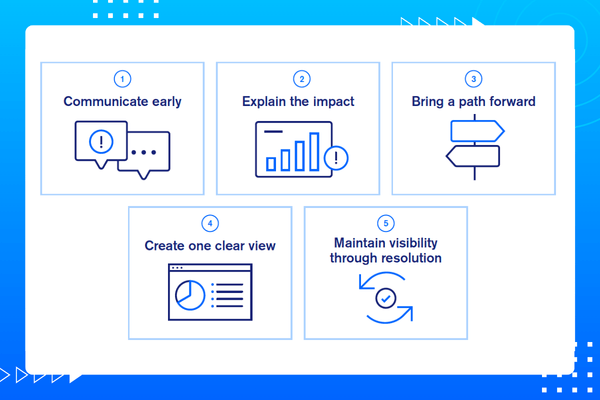
The research frames that progression around three questions. What is happening? What does it mean? And what can be done? From there, five behaviours help translate that visibility into clearer, more actionable communication for retailer partners.
1. Communicate early
Retailers need time to respond when a supply issue could affect their business. That means strong communication often needs to begin before every answer is available. The goal is not certainty at the first sign of risk. It is providing enough early visibility that retailer partners can assess what may be coming and determine whether plans need to change.
2. Explain the impact
Knowing that something has changed is only part of what a retailer needs to know.
Stronger Supply Chain Communication connects the operational issue to its potential implications for the retailer’s business. That requires suppliers to understand retailer priorities well enough to provide context, rather than simply pass along information.
3. Bring a path forward
Visibility becomes more valuable when it helps move the conversation forward. Not every supply challenge can be resolved immediately, but suppliers can help reduce uncertainty by moving beyond the problem toward potential options and next steps. Strong communication combines transparency with a problem-solving mindset.
4. Create one clear view across teams
What retailers hear externally often reflects how well supplier teams are aligned internally.
When different functions are working from different information, timelines or expectations, complexity gets passed on to the retailer. Stronger communication depends on creating greater alignment behind the scenes so the retailer experiences one clear, consistent view.
5. Maintain visibility through resolution
Strong communication does not end with the first update. As conditions evolve, retailers need continued visibility into meaningful changes and what happens next. Maintaining that connection through resolution helps prevent an early warning from becoming another issue the retailer has to chase.
The pattern behind the gains
Taken together, these behaviours reveal something important about Supply Chain Communication: it rarely operates in isolation.
AGI’s year-over-year analysis shows that suppliers making meaningful gains tend to improve across a broader set of interconnected capabilities. Communication moves alongside fundamentals such as Strategic Alignment, Collaborative Business Planning and Cross-Functional Alignment, all of which can shape whether the information reaching the retailer is timely, coordinated and useful.
That makes Supply Chain Communication more than a communications exercise. It is an execution capability, and often the visible outcome of how effectively teams align, coordinate and respond around the retailer.
For suppliers, the opportunity is not simply to communicate more. It is to make communication more actionable: giving retailer partners the clarity they need to understand what is changing and respond with greater confidence.
Explore the Research
Excelling at Supply Chain Communication: A Guide for U.S. Suppliers explores the five behaviours in practice, what the research reveals about suppliers gaining ground, and how performance priorities differ across Core Food and Core Non-Food.